
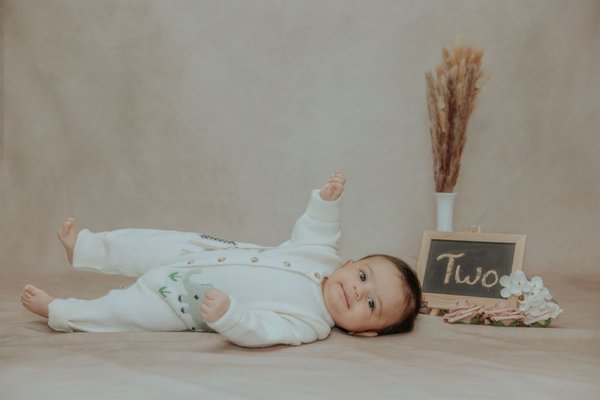
A baby can look completely different from one month to the next, yet the camera roll often makes those changes surprisingly hard to see. Baby milestone cards solve that problem with one small, recognizable detail: a card that tells you when a photo was taken or what happened that day. Repeat the idea throughout the first year, and ordinary snapshots become a visual story.
The best baby milestone card ideas are not necessarily the most elaborate. A readable card, a familiar setting, and moments that feel true to your family will do more than a perfect set of props ever could.
Start With a Simple Card System
Before taking photos, decide what your cards need to record. Monthly milestone cards usually cover one month through twelve months. Add a welcome card for the earliest photos, then a smaller collection of baby firsts cards for moments you genuinely want to remember.
Choose one shape, typeface, and color palette across the set. That visual consistency makes photos taken in different rooms, seasons, or outfits feel connected. You can still introduce variety through the background, clothing, and baby’s expressions.
Monthly Baby Milestone Card Ideas That Tell a Story
The traditional month-by-month photograph works because the wording stays predictable while everything around it changes. Place the card in approximately the same position each time and photograph from a similar angle. The result becomes particularly striking when you arrange the images side by side at the first birthday.
Keep the Age Card Consistent
Use clear phrases such as “One Month Old” and “Six Months Old,” rather than highly decorative lettering that disappears on a phone screen. A plain card beside a patterned blanket often works better than a patterned card on a patterned blanket. Leave enough space around the text to crop the image later.
Add a Small Detail That Changes
Try photographing the same soft toy beside the card every month, but keep the toy out of baby’s reach if it could interfere with a safe setup. Another option is to use a different seasonal fabric beneath the card. Keep one element stable and let one element evolve; changing everything makes comparisons harder.
Use a Two-Photo Tradition
Take one wider photograph showing the whole setup and one closer portrait with the milestone photo card visible. The wide picture makes a good comparison grid. The portrait preserves expressions: sleepy eyes, a skeptical look, or a grin that no staged pose could reproduce.
Baby Firsts Cards for Moments Beyond the Calendar
Some memories do not arrive on a monthly schedule. A first laugh, a first trip to the park, or a first taste of a new food can be more personal than an age marker. Keep these cards flexible rather than treating them as a developmental checklist. Children reach milestones at different times, and not every event needs documenting.
Everyday Firsts Worth Remembering
Consider cards reading “My First Outing,” “My First Family Holiday,” “My First Tooth,” or “I Tried Something New.” You can also celebrate quieter changes: “I Love Bath Time,” “My Favorite Song,” or “Today I Met Grandma.” These details help future-you remember what life actually felt like.
Build a Repeatable Photo Setup, Not a Complicated One
For a recognizable first-year series, choose a spot with soft natural light, perhaps beside a window where the lighting is usually gentle. Use a plain backdrop that contrasts with the card. Turn off harsh overhead lighting if it creates distracting shadows, and check that the words are facing the camera.
For example, you might place a cream-colored card on a pale blue mat near the lower corner of each photo. At three months, the image shows a tiny curled hand; at nine months, the same framing captures a curious reach toward the card. That unplanned change becomes the story.
Keep sessions short and follow your baby’s comfort rather than the calendar. Take photos while your baby is awake and supervised. Use a safe, stable surface, never balance the baby on furniture or elevated props, and keep small, sharp, or loose decorations away from little hands and mouths. If the card is being grabbed, photograph it separately and combine the images in an album layout instead.
You can find complementary setup inspiration in newborn photo ideas at home and simple baby photo backdrop ideas. The goal is a repeatable routine, not a studio production.
Design Cards That Stay Readable in Photos
Good baby milestone cards have high contrast, generous lettering, and very little competing decoration. Matte paper reduces glare; sturdy cardstock is easier to keep flat. Test a card by taking a photo and viewing it at thumbnail size. If you cannot read the age without zooming in, increase the text size or simplify the design.
For a timeless look, try warm neutrals with charcoal lettering, soft colors with a clean serif font, or a single illustrated border. Avoid relying on color alone to communicate the milestone. Large, simple wording helps the photos remain useful in printed albums as well as on screens.
Preserve the Memory Behind Each Card
A date on a card is helpful, but a sentence about the day can be even better. After each session, save the favorite image with the month and year in its filename, then add a short note: what made your baby laugh, which song settled them, or who was there. Store the originals in at least one backed-up location.
At the first birthday, select one monthly picture from each month for a collage. Put a few unexpected firsts on a second page so the album shows both growth and personality. A first-year baby photo checklist can help organize the images without turning family memories into a task list.
Frequently Asked Questions
When should I start using baby milestone cards?
You can start with a welcome or “Hello World” card shortly after birth, whenever you feel ready. The first monthly card can mark one month after your baby’s birth. There is no need to recreate missed photos.
Do all twelve monthly photos need the same background?
No. Repeating the card design, approximate angle, or a favorite object is enough to create continuity. Changing backgrounds can make the series feel more personal and seasonal.
Are printable milestone cards a good alternative to store-bought sets?
Yes. Printables let you choose wording that suits your family. Use thick paper, a legible font, and a non-glossy finish; check the first printed card in a real photograph before making the whole set.
What if my baby skips a milestone shown on the cards?
Skip that card too. Baby firsts cards are memory prompts, not a timeline for development. Choose moments that actually happen, and ask your child’s healthcare professional about any development concerns rather than using card sets as a guide.
A First-Year Record That Feels Like Yours
The most meaningful milestone photos rarely come from elaborate staging. They come from showing up regularly, noticing small changes, and making space for surprises. Start with clear monthly cards, keep a few blanks for unplanned firsts, and save a sentence with each favorite image. By the end of the year, those little cards will connect a collection of photos into a story you will want to revisit.