
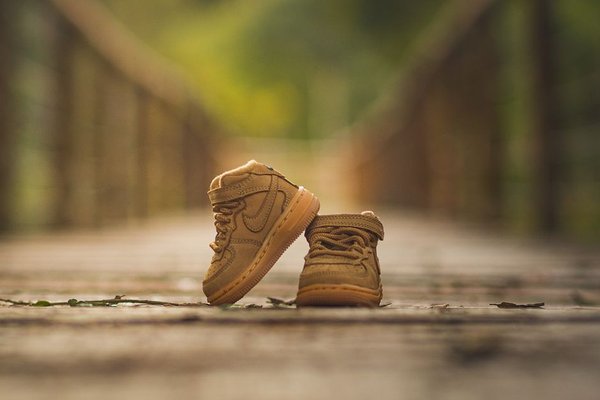
A baby’s onesie might fit perfectly at six months, but that doesn’t mean shoes marked “6–9 months” will fit. Clothes usually use age-based labels and body measurements. Baby shoes depend on the length and shape of each foot. A useful baby shoe size chart starts with a measurement, not a birthday.
Two babies of the same age may need different shoes. Here is how to measure baby feet at home, interpret US sizes, and check whether a pair fits.
Baby shoe sizes: what the numbers mean
In the United States, infant footwear commonly carries numerical sizes such as 2, 3, 4, and 5. Some brands add “C” for child; others use age ranges as a shopping shortcut. The foot length associated with a particular number can vary by brand.
“Newborn,” “infant,” and “toddler” describe product categories rather than a precise fit. Soft crib shoes may use month ranges, while first-walker shoes typically have numbered sizes. Consult the manufacturer’s chart whenever possible.
US baby shoe size chart by foot length
This infant shoe size chart uses rounded foot-length measurements from Stride Rite’s published US sizing guide as a reference. They describe the foot associated with a size, not the internal length of every shoe. Other brands may differ.
US size 1: approximately 9.1 cm (3.6 inches).
US size 2: approximately 9.9 cm (3.9 inches).
US size 3: approximately 10.8 cm (4.3 inches).
US size 3.5: approximately 11.2 cm (4.4 inches).
US size 4: approximately 11.6 cm (4.6 inches).
US size 4.5: approximately 12.0 cm (4.7 inches).
US size 5: approximately 12.5 cm (4.9 inches).
US size 5.5: approximately 12.9 cm (5.1 inches).
US size 6: approximately 13.3 cm (5.2 inches).
US size 6.5: approximately 13.7 cm (5.4 inches).
US size 7: approximately 14.1 cm (5.6 inches).
These are reference points, not rigid boundaries. A foot near the next size, or a wider foot, makes trying on the shoe especially important. Use the chart to narrow your choices, then check the actual fit.
How to measure baby feet at home
Use paper, a pencil, and a ruler
Place paper against a wall on a firm, level floor. If your child stands comfortably, have them stand with the heel lightly touching the wall and their weight naturally on the foot. Keep the foot flat rather than curling the toes. Mark the tip of the longest toe; it is not always the big toe.
Measure from the paper’s wall edge to the mark in centimeters. Repeat for the other foot. Record the longer measurement, because it is common for one foot to be slightly larger.
For a baby who cannot stand, gently position the foot flat on paper without stretching the toes and measure heel to longest toe. Treat it as an estimate: a relaxed infant’s foot can move, so measure twice.
Check the result before buying
Suppose the longer foot measures 12.7 cm. On this example chart, that falls between US sizes 5 and 5.5. Size 5.5 is a reasonable starting point for that brand, not a guarantee. Check its current guidance, available widths, and the actual shoe instead of adding an entire extra size automatically.
If you use a printable guide, print at 100% scale and verify its calibration mark with a ruler. A page resized by your printer can turn a careful measurement into the wrong size.
How much growing room should baby shoes have?
Children need space ahead of their longest toe. The American Academy of Pediatrics advises checking for roughly a finger-width of room between the big toe and the inside front of a toddler’s shoe. The exact space depends on the shoe and child; follow the maker’s fitting instructions too.
Do not confuse growing room with oversized shoes. A shoe that slides at the heel or causes stumbling may be too big. Brand foot-length charts generally account for their intended fit, so avoid adding extra length unless the manufacturer instructs you to.
Fit involves more than foot length
A correct US baby shoe size can still feel wrong if the toe box is narrow or the opening presses on the top of the foot. Baby feet can be broad and rounded. Choose enough width for toes to spread naturally without squeezing.
With the shoe on, check that the heel stays secure, toes are not against the front, and fastenings hold without leaving deep marks. Try shoes with the socks your child normally wears. A baby sock size guide can help you choose suitable socks alongside new shoes.
Babies who are not walking generally need only comfortable socks or soft protective booties. Once they walk outdoors, choose lightweight, flexible shoes with slip-resistant soles. The American Academy of Pediatrics does not recommend stiff, corrective-looking features for an otherwise healthy child’s first shoes.
When to remeasure growing feet
Check fit at least monthly during the early walking stage. The American Academy of Pediatrics notes that a first pair of walking shoes may fit for only two or three months. Do not wait for your child to complain; look for toe pressure, repeated attempts to remove shoes, rubbing, or red marks.
Remeasure before ordering a replacement, even if buying the same style. A baby clothing size chart can help with outfits, but month ranges cannot tell you when feet have outgrown footwear. For outdoor adventures, a first walking shoes guide can help with flexible soles and practical fastenings.
Frequently asked questions
What shoe size does a six-month-old baby wear?
There is no single correct size by age. Some charts associate around six months with US sizes 2 or 3, but babies vary considerably. Measure the longer foot and compare it with the manufacturer’s chart instead.
Should I size up if my baby’s feet are between sizes?
The larger nearby size is worth trying first, provided it does not slip or affect walking. Check width and toe room before deciding. A different shoe shape may fit better than simply increasing the length.
Can I measure my baby’s foot while they are sleeping?
You can get an approximate measurement while the foot is relaxed, especially for a baby who cannot stand. For a child who walks, standing measurements generally better reflect the foot’s weight-bearing shape.
Are US infant shoe sizes the same across brands?
No. Size numbers are familiar, but foot-length charts and shoe shapes differ. Use the brand’s own measurements and try footwear on whenever possible.
A simpler way to get the right fit
Keep a note of both foot measurements and the date, then compare the longer foot with the maker’s current chart. Check width, toe space, and heel security when the pair arrives. The best baby shoe size chart is a starting point for a comfortable fit, not a substitute for checking your child’s shoes.