
Few situations feel more frightening than seeing a baby become unresponsive or struggle to breathe. Even reading about it can make a parent’s stomach tighten. But knowing the basics of CPR for infants can turn panic into action, and in an emergency, those first moments matter.
Infant CPR is not something anyone wants to use, of course. Still, it is one of those life skills that every parent, grandparent, babysitter, and caregiver should understand. Babies are small, fragile, and unable to tell us what is wrong, so when breathing stops or the heart is no longer circulating blood effectively, fast help is essential.
This guide explains CPR for infants in a calm, clear way. It is not a replacement for certified hands-on training, but it can help you understand what infant CPR involves, when it may be needed, and why preparation can make such a difference.
Understanding What Infant CPR Means
CPR stands for cardiopulmonary resuscitation. In simple words, it is a lifesaving technique used when someone is unresponsive and not breathing normally. For an infant, CPR combines chest compressions and rescue breaths to help move oxygenated blood through the body until emergency medical help arrives.
An infant is usually considered a baby under one year old. CPR for infants is different from CPR for adults because a baby’s body is much smaller and more delicate. The pressure, hand position, and breathing technique all need to be adjusted. That is why infant-specific CPR matters.
The main goal is not to “restart” the baby in a dramatic movie-like way. The real goal is to keep oxygen moving to the brain and vital organs. Chest compressions help circulate blood. Rescue breaths help provide oxygen. Together, they can give a baby a better chance while waiting for trained emergency responders.
When CPR for Infants May Be Needed
CPR for infants may be needed if a baby is unresponsive and not breathing normally. This might happen after choking, drowning, a severe breathing problem, a serious infection, trauma, or another medical emergency. Sometimes, the cause is not immediately clear, which makes it even more important to act quickly.
A baby who needs CPR will not simply be sleeping deeply. They may not respond when you call, tap, or gently stimulate them. Their breathing may be absent, irregular, gasping, or not normal. Gasping is not the same as normal breathing and should be treated seriously.
Before starting CPR, quickly check whether the area is safe. If the baby is in danger from water, traffic, fire, electricity, or another hazard, move them only if it is necessary to protect them and yourself. A rescuer cannot help if they become injured too.
Calling for Emergency Help First
If a baby is unresponsive and not breathing normally, emergency help is needed immediately. If someone else is nearby, ask them to call emergency services right away and bring an AED if one is available. Speak clearly and directly. In a stressful moment, people may freeze unless given a specific task.
If you are alone, the action may depend on your local first-aid guidance and the situation, but the most important idea is not to delay CPR. Many infant emergencies are related to breathing, so compressions and breaths are especially important. Use speakerphone if possible so you can call emergency services while staying with the baby.
Once help has been called, begin CPR and continue until the baby starts breathing normally, trained help arrives, an AED is ready to use, or you are physically unable to continue.
Placing the Baby Correctly
Lay the baby on their back on a firm, flat surface. A floor or firm table is better than a soft bed or couch because soft surfaces absorb the force of compressions. The baby’s head, neck, and body should be in a neutral position.
Try not to waste time searching for a perfect setup. In an emergency, simple and safe is enough. The baby needs a firm surface, an open airway, and immediate support.
If there is anything obvious in the baby’s mouth, such as a visible object, you may carefully remove it. Do not do a blind finger sweep. Pushing fingers into the mouth without seeing the object can move it deeper and make the situation worse.
Chest Compressions for an Infant
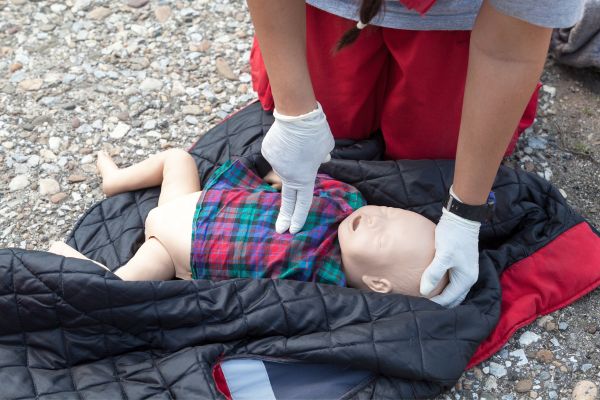
Chest compressions are the center of CPR. For an infant, compressions are usually given in the middle of the chest, just below the nipple line. The pressure should go straight down, not sideways or toward the stomach.
For a single rescuer, many traditional first-aid instructions describe using two fingers in the center of the baby’s chest. In professional or two-rescuer settings, the two-thumb encircling technique may be used, where both thumbs press on the chest while the hands support the baby’s back. Training organizations may update techniques over time, which is one reason hands-on CPR classes are so useful.
The depth is important. Compressions need to be deep enough to move blood, but controlled enough for a baby’s small body. A common guide is about one-third the depth of the chest, around 1½ inches. Let the chest come back up fully after each compression. This recoil helps blood flow back into the heart.
The rhythm should be steady and quick, usually around 100 to 120 compressions per minute. In plain language, that means firm, regular compressions without long pauses.
Giving Rescue Breaths to a Baby
After 30 chest compressions, give 2 rescue breaths. To do this, gently open the airway. A baby’s airway is small, so avoid tilting the head too far back. A slight head tilt and chin lift is usually enough.
Cover the baby’s mouth and nose with your mouth to make a seal. Give a small breath, just enough to make the chest rise. Then allow the chest to fall before giving the second breath. These breaths should be gentle. A baby’s lungs are tiny, so forceful breaths are not needed and may be harmful.
If the chest does not rise, reposition the head and try again. There may be an airway issue, or the seal may not be correct. Do not spend too long trying repeatedly. Return to compressions and continue the cycle.
The usual pattern for a single rescuer is 30 compressions followed by 2 breaths, repeated again and again. It can feel intense, but the rhythm gives structure to a frightening moment.
Why Rescue Breaths Matter for Infants
Many people have heard about hands-only CPR for adults. That advice can be helpful in adult sudden cardiac arrest, but babies are different. Infant emergencies often begin with breathing problems. Because of that, rescue breaths are an important part of CPR for infants.
A baby may stop breathing before the heart fully stops. Giving breaths along with compressions helps provide oxygen while the compressions help move blood around the body. This is why infant CPR training usually emphasizes both parts.
If you truly cannot give rescue breaths, chest compressions are still better than doing nothing. But when possible, CPR for infants should include both compressions and breaths.
Using an AED for an Infant
An AED, or automated external defibrillator, is a device that can check the heart rhythm and deliver a shock if needed. Many public places now have AEDs, and some include pediatric pads or settings. If an AED is available, it should be used as soon as possible.
For infants, pediatric pads are preferred when available. If only adult pads are available, emergency guidance often says to use them rather than skip the AED, while making sure the pads do not touch each other. The AED gives voice instructions, so follow them carefully.
Do not stop CPR for long while setting up the AED. The goal is to minimize interruptions. If another person is present, they can prepare the AED while you continue compressions and breaths.
What to Do If Choking Is Involved
Sometimes an infant becomes unresponsive because of choking. If a baby is conscious but unable to cough, cry, or breathe, choking first aid is needed. That is different from CPR. However, if the baby becomes unresponsive, CPR should begin.
When doing CPR after choking, look in the mouth before giving breaths. Remove an object only if you can clearly see it. Again, do not sweep blindly inside the mouth. If breaths do not make the chest rise, return to compressions. Chest compressions may help dislodge the blockage.
Choking emergencies are one of the strongest reasons caregivers should learn infant first aid in person. Practicing the movements on a training doll builds confidence that reading alone cannot provide.
Staying Calm Enough to Act
No parent or caregiver feels perfectly calm during an emergency. That is normal. The goal is not to feel fearless. The goal is to act even while afraid.
Try to focus on the next step: check response, call for help, place the baby on a firm surface, start compressions, give breaths, keep going. Thinking in small steps can stop panic from taking over.
It may also help to say the count out loud. Counting compressions keeps your rhythm steady and gives your mind something concrete to follow. If another person is nearby, switch roles if you become tired, but avoid long pauses.
Why Hands-On Training Is Worth It
Reading about CPR for infants is helpful, but practicing with an instructor is much better. In a CPR class, you can learn the correct pressure, hand placement, breathing technique, and AED use. You can also ask questions and practice until the movements feel less unfamiliar.
Many parents take a CPR course during pregnancy or in the early months after birth. Grandparents, older siblings, babysitters, and childcare providers can benefit too. It is one of the most practical gifts a family can give itself: the knowledge of what to do when every second feels heavy.
Guidelines can also change, and certified training helps keep you updated. Even if you learned CPR years ago, a refresher is a good idea.
Common Mistakes to Avoid
One common mistake is waiting too long because of fear of doing something wrong. In a true emergency, doing nothing can be far more dangerous than imperfect CPR. Another mistake is pressing too softly. Gentle touching will not circulate blood. Compressions need to be firm and rhythmic.
Giving breaths too forcefully is also a concern. Babies need small, gentle breaths, just enough to make the chest rise. Long pauses are another issue. Try to keep interruptions short, especially between compressions.
Finally, avoid relying on memory alone if emergency services are on the phone. Put the call on speaker and follow the dispatcher’s instructions. They are trained to guide people through emergencies.
Conclusion
CPR for infants is a serious topic, but it does not need to be surrounded by fear alone. It is really about readiness. A baby who is unresponsive and not breathing normally needs immediate help, and knowing the basic pattern of compressions and breaths can make a real difference while waiting for emergency responders.
No article can replace hands-on training, and every caregiver should consider taking an infant CPR class. Still, understanding the essentials gives you a starting point: act quickly, call for help, use a firm surface, give steady chest compressions, provide gentle rescue breaths, and keep going until help arrives or the baby starts breathing normally.
In the quiet routines of feeding, changing, rocking, and watching a baby sleep, CPR may feel like a distant thought. But preparation is part of care too. Hopefully, you will never need to use it. If you ever do, knowing what to do can help you move through fear and protect the smallest life in the room.